
Useful Facts About the Remarkable Lipizzaner Horses in Florida

I was young – maybe 8 or 9 – the first time I saw the Lipizzaner Stallions. My bff, Khrys, and I were absolutely horse crazy, and we were lucky enough to have parents who were 1) friends with each other, and 2) super supportive of most things. When the Lipizzaner horses toured to Wilmington, North Carolina, our moms took us.
It was magical. Easily one of the best nights of my young life. I knew pretty much every Lipizzan fact before their arrival and read the program cover to cover after they left. For two girls from boating families, this special event shaped our future selves. I went on to professionally ride and train horses for many years, while Khrys has a wonderful farm in North Carolina.

By sparre – CC BY-SA 3.0
When I learned that the famous Lipizzaner stallions winter in Florida, I had to go see their facility and weekend show. It was a birthday treat one year, one that I shared with my mom and son. If you have a horse crazy child, or just want to do something a little different in Florida, don’t miss this activity.
History of Lipizzaner Stallions
The Lipizzan breed is one of the oldest in Europe. The breed originated in then the Austrian Empire (now Slovenia) when Archduke Karl II created a stud farm in Lipizza in 1580. However, the foundation for the breed dates even further back.
The Foundation Breeds of the Lipizzaner Horses
Local horses from the Karst mountain region were used as foundation stock for the Lipizzaners, and these horses had been selectively bred for certain traits since medieval times. Romans bred them for their hardiness, strength, stamina, and good temperament. Karst horses were highly sought after as war horses and for jousting tournaments.
Spanish horses, including Andalusians, date back to the 8th century when Arabian and Berber horses were imported to the Iberian peninsula and bred with local heavier horses. These cross of these horses created animals with long, flowing manes and high-stepping gaits. They eventually became a status symbol at royal courts.

By Waugsberg CC BY 2.5
The now-extinct Neapolitaner breed originated in Italy as a result of breeding imported Arabians with the local draft horses. This breed remained much heavier than the Spanish horses though it also showed traits such as high-stepping gaits and a quiet temperament. In the 1600s, it was considered the favored horse for parades and Haute Ecole.
Creation of the Lipizzaner Horses
By the mid to late 1500s, it had become difficult to import high quality horses. The Archduke at Vienna, Karl II, decided that Austria should breed its own horses. Over several years, he imported 9 Spanish stallions and 24 Spanish mares and bred them with the local Karst horses. Through the 1600s and into the 1700s, Spanish horses and Neapolitaner horses were added heft to the breed while Arabian blood added grace and refinement. Careful breeding created eight prized stallion lines and 18 prized mare lines. Through this time, the horses were known simply as Karst or Spanish Karst. It wasn’t until the late 1800s that the term Lipizzan was used as a name for this breed.
The Effects of War
The Lipizzan breed was affected by various wars starting with the Napoleonic Wars in 1796. War is what spread the breed to other countries, including the United States, and also what endowed an almost mythological rarity to the breed. In less than 20 years, the horses from the Lipica stud were evacuated three times – to Hungary in 1796, to Dakovo (present day Croatia) in 1805, and again to Hungary in 1809.
After this, the region experienced relative peace for more than 100 years. In 1915, war again broke out, and this time the horses from Lipica went to several different places. After the end of World War I, the horses were split among different countries, including Italy and Hungary, and thus began the creation of several Lipizzan breeding facilities. The horses were distributed even more widely during World War II. The Lipizzan Connection has a very comprehensive page about all of that if you’re interested in the specifics.
Lipizzaner Horses in the United States
During World War II, the majority of the Lipizzan breeding stock was concentrated at the stud farm in Hostau. In 1945, with increased air strikes in the area, a German officer surrendered to US forces in a bid to save the horses. Commander Charles Reed, also a horseman, contacted General Patton. Patton himself was a dressage rider who had competed at the 1912 Stockholm Olympics and recognized the value of the rare horses. He ordered the horses secretly moved by freight train to Bavaria which was under US control.
After the war, the majority of the Lipizzaner horses returned to various breeding facilities. The US Army, however, kept some of the horses and brought them to the United States. Several farms in the United States house more than 1000 horses, about 1/8 of the worldwide population of the breed.
Hermann’s Royal Lipizzan Stallions
The Hermann family boasts a 300 year history with the Lipizzaner horses. A Hermann ancestor, a knight, received a Lipizzan horse as a gift. At that time, Lipizzan horses often found themselves as gifts and transported to other parts of Europe.
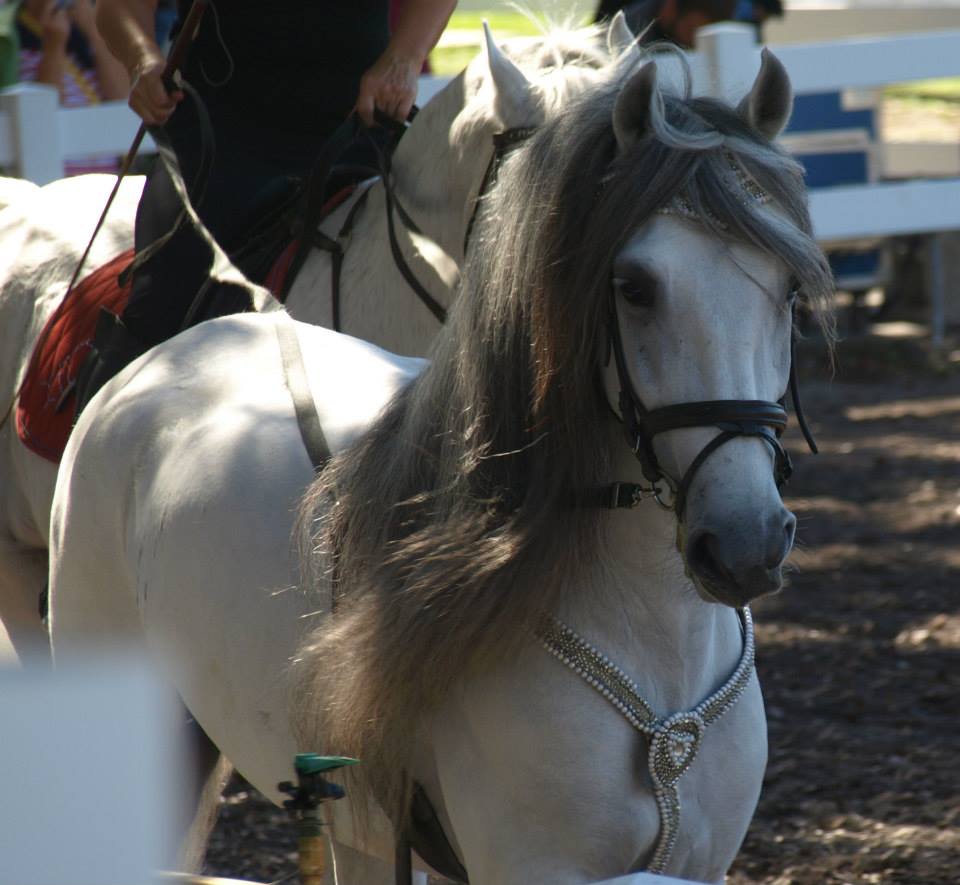
Fast forward to World War II. Colonel Hermann and his father, Colonel Otto Hermann, helped rescue the Lipizzan horses and move them to Bavaria. After the war, Colonel Hermann founded the Hermann’s Royal Lipizzan Stallions near Myakka City, Florida. The farm in Florida is their winter headquarters and where their horses retire. During the summer, many of the horses and Hermann’s daughter (Colonel Hermann has since passed away) travel the United States performing to the delight of all horse lovers.

The winter performances at the farm give visitors a glimpse into how the horses are trained. Held every weekend, Hermann demonstrates various training techniques, tells the history of the breed, and answers questions fro the crowd. Young horses perform alongside experienced ones. It’s an interesting window into the progression of a horse’s training from the moment the horse meets a saddle to learning the difficult airs above the ground. After the performance, visitors can stay as long as they want exploring the farm and feeding treats to the horses in the pastures and in the barn.
What’s So Special About Lipizzan Horses?
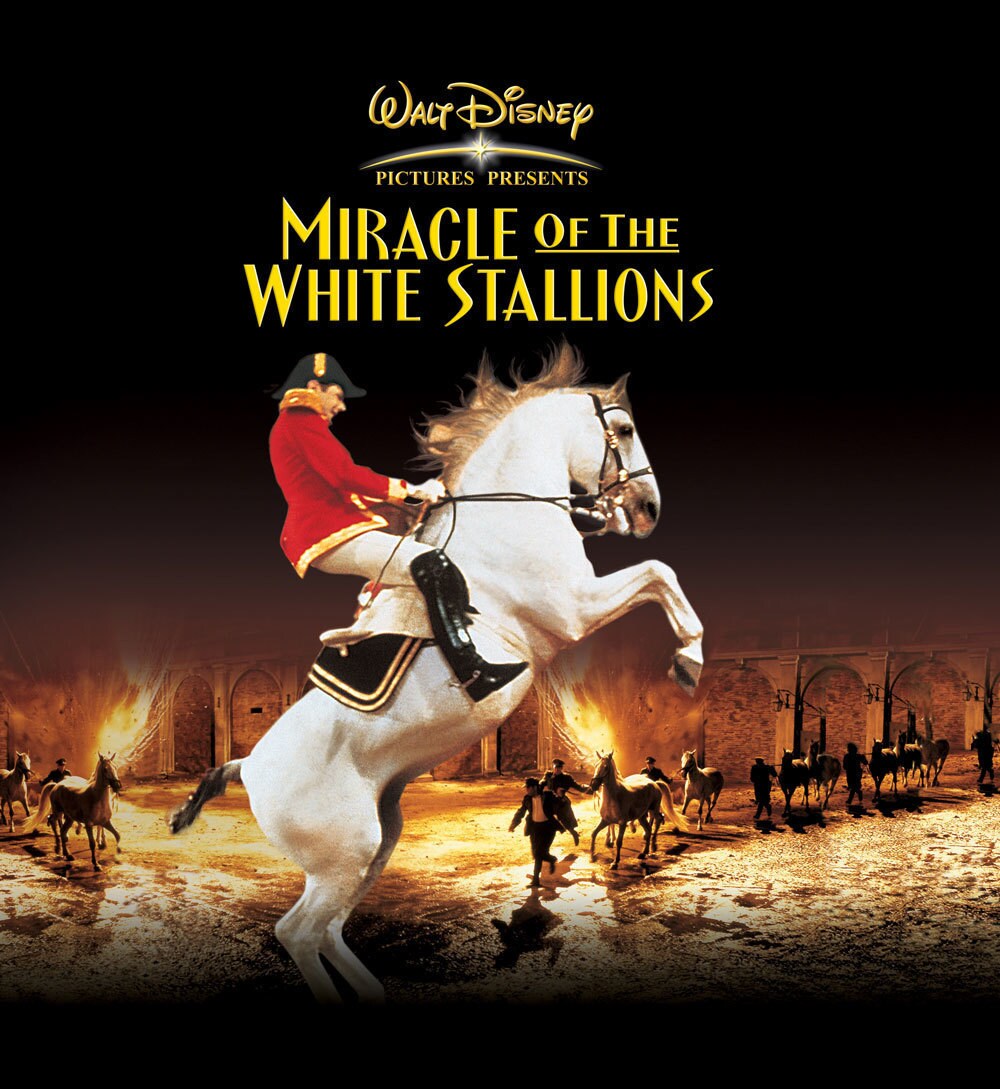
So many reasons! These horses are rare – less than 9,000 worldwide – and are considered one of the rarest breed of horses. The Lipizzans, of course, have a wonderfully unique history, part of which was made into a Disney movie, Miracle of the White Stallions. The beautiful white coat also makes this breed very special, as does their training to perform the difficult airs above the ground.
Lipizzan Stallions’ White Coats
Lipizzaner horses are not actually white. Rather, they are a very light shade of gray. The only truly white horses in the animal kingdom are albinos. Like other gray horses, Lipizzans are born dark – typically brown or bay – and lighten as they get older. Considered the most royal and favorable of colors for the Imperial Court, the Lipizza stud bred the white color into their horses. Over the centuries, white has become the dominant color of these horses. For many years, various studs kept a colored Lipizzan at their farms for good luck.

Airs Above the Ground
Rumor holds that the military cavalries used the airs above the ground as a means of defending their riders. Though it sounds legendary, this would have made the horses vulnerable as many of the airs expose the animal’s belly.
Airs above the ground are a number of higher level dressage movements in which the horse leaps into the air or otherwise leaves the ground. The movements require incredible strength, agility, and years of training. The airs include the levade, pesade, capriole, croupade, ballotade, courbette, and mezair. Though taught to other breeds, including Andalusians, the airs are most often associated with Lipizzans.
See the Lipizzaner Horses in Florida
Hermann’s Royal Lipizzan Stallions offers a unique experience in Florida, something you won’t find in many other places in the United States and certainly a (sometimes welcome) departure from Florida’s normal beaches and theme parks. Here’s what you need to know to visit the farm near Sarasota.

Performances are training sessions so don’t expect all of the glitz and glamour from a paid performance at an exhibition center. Expect a more relaxed atmosphere held on Saturday mornings. Visitors can sit in the bleachers or bring their own chairs. Arrive early to get a spot in the shade. Admission is a $5 per person donation. Be aware that this is one of the main ways the farm makes revenue so there will be other optional services that you can pay for, such as photos with the horses and a 50/50 raffle.
Getting to Hermann’s Royal Lipizzan Ranch
It’s out in Florida’s country so it’s best if you have a vehicle as there is no train or bus service to this location. It is, however, easily accessible from Sarasota, Bradenton, Arcadia, Tampa, and even Orlando.
For other outdoor adventures, consider staying near Myakka City overnight. In the area, you can visit other farms, go to the Sarasota Sea Lion Preserve, or go kayaking on the Myakka River.
Let’s Connect!
Follow me on Facebook, YouTube, and Instagram. And if you’re looking for a great community for sharing travel tips, discounts, secret spots, and hidden gems, go join my Facebook group, Florida Travel Tips & Secret Spots.
Travel Resources:
These are the places I first go when planning or booking travel. They ARE affiliate links so if you use one I may earn a small commission (at no cost to you) and (bonus!) it’ll help me keep running this site. Visit my travel resources page to see all of the services and gear I recommend.
Flights: We always check flight prices and information on Way Away first.
Hotels: We use Expedia to compare and book hotels. We also love Booking.com for boutique hotels and B&Bs.
Vacation Rentals: For vacation rentals and other non-traditional lodging options, VRBO is our go-to.
Tours & Tickets: We use Viator for private tours and unique experiences.
Rental Cars: Though we prefer to experience a city through its public transportation, there are times when a rental car is needed and in those instances, we use Discover Cars.
Travel Insurance: No one wants to need it, but it’s great to have when you do. VisitorsCoverage is our go-to provider.

Wow. I didn’t even know they had these horses in Florida. That’s incredible!
Love the history behind the creation of the breed. If we ever take a trip to that part of the state, we will probably swing by because I’m sure my wife would love to see them. Beautiful creatures.
They are beautiful indeed! I’m sure she’ll love a trip to see them.
I pinned this to come back to it later. My youngest son would go crazy because he loves horses and these are so special! I hope to take him there one day. These horses are beautiful!
I’m sure he’ll love it!
I had no idea the Lipizzaner Stallions were so close, my daughter would love to visit. We have seen them perform in town and they are stunning, and that mane is gorgeous.
I didn’t realize it either. It was wonderful to see them.
My middle daughter would love this!! Thanks for sharing!
Thank you, Ghulum!