
A Short Walk at Madira Bickel Mound State Archaeological Site

Archaeology fascinates me. It always has. All that ancient history, the way people lived and did things, how our ideas and inventions developed. The huge amount knowledge that people before us possessed.
I first learned of Madira Bickel Mound State Archaeological Site years ago. It was Florida’s first archaeological site to be preserved as a state park. It’s by no means the largest or best preserved of the archaeology sites in Florida either. Yet, the more I learned about the original Native Americans in Florida, the more I yearned to visit as many of the mounds and ancient sites as I could.
Living in the Tampa Bay area now, this yearning for the ancient turned into a quest to find them. And to explore as many mounds as possible. There are several Indian mounds in the Tampa Bay area. The smallest – or one of the smallest – is Madira Bickel Mound. Don’t let the size fool you though. There’s a remarkable amount of history here and on surrounding Terra Ceia Island.
I set off for this mound as part of a day-long adventure to visit several mounds in the area. After seeing Jungle Prada and embarking on a futile search at Pinellas Point (I was in the wrong place) and Maximo Park (should have explored here more), I drove over the Sunshine Skyway Bridge to the south side of Tampa Bay. The water stretched out into the Gulf of Mexico, glistening like diamonds caught in a loupe’s light. I might have noticed more but was too busy getting over the bridge to look.
Terra Ceia Island comes up quick after exiting the Skyway. I followed Lisa Lisa’s directions and turned right onto a surface street, dropping down to sea level from the highway. The first thing I noticed was how low the land is. The Realtor in me red-flagged it as “probably floods”. I turned from one narrow paved road onto another, greeted by an historic post office. Several houses in the Florida vernacular style sit back from the road. My interest piqued, I took note of historic markers and the original schoolhouse. I definitely plan to go back and explore on foot or by bike.
Lisa Lisa took me the long way, like she so often does. A few minutes on smaller-than-two-lanes roads and I arrived at a fork in the road. According to Lisa Lisa, “You have arrived at your destination.” Thankfully, Florida State Parks erected directional signs and a minute or two I truly arrived.
About Madira Bickel Mound State Archaeological Site
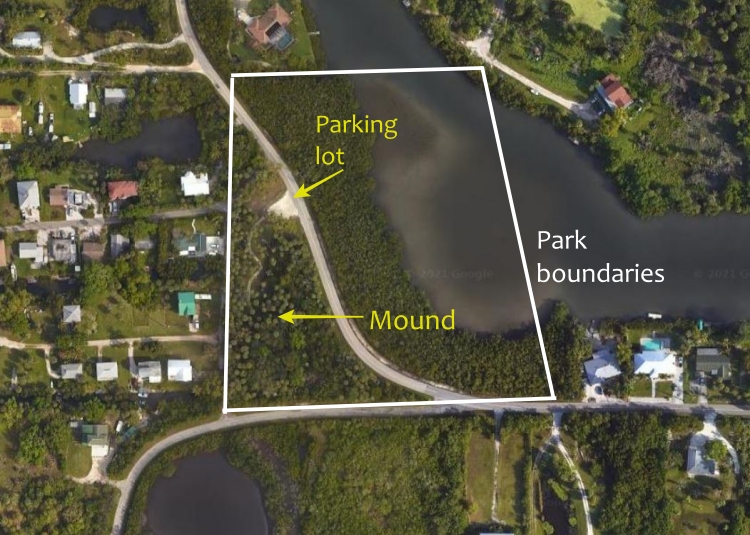
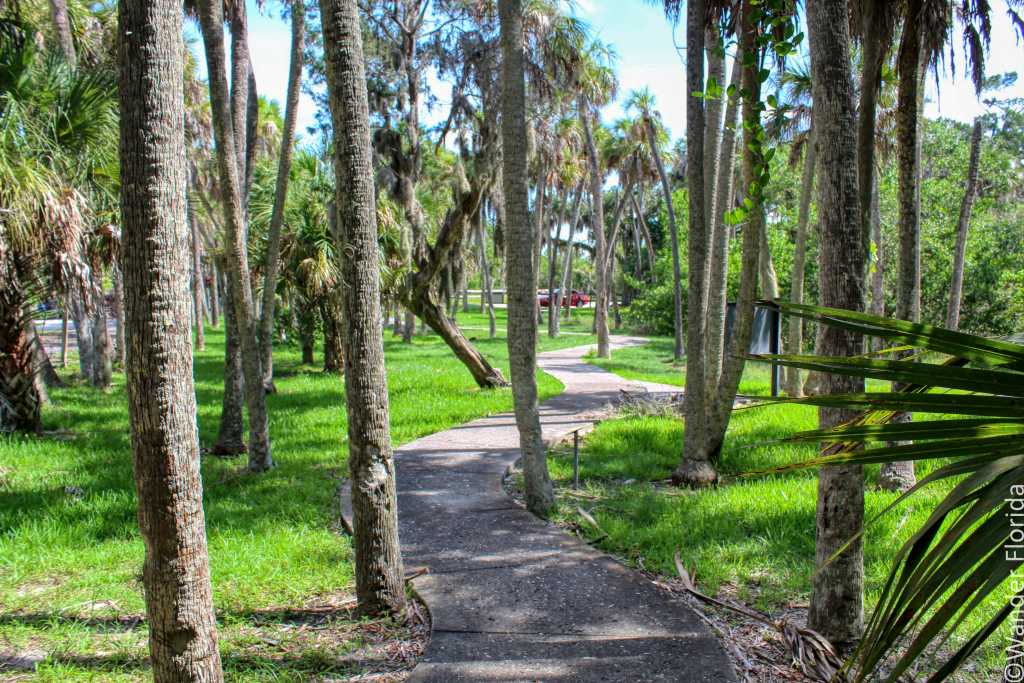
The state says Madira Bickel Mound park is 10 acres. It very well might be; however, maybe only 1-2 acres is accessible. It’s certainly not what one expects from an award-winning state park system. I pulled into a miniscule parking lot of crushed shells, parked, and walked through an unlocked cattle gate. A concrete sidewalk winds past a decrepit picnic table and through a stand of palm trees. The park is fenced off from the surrounding subdivision with a wire and board fence allowing views of the homes that sit nearby. In the time of the Tocobaga, all of that area was part of the village and several other mounds existed nearby. Those have been bulldozed for waterfront views from elevated balconies.
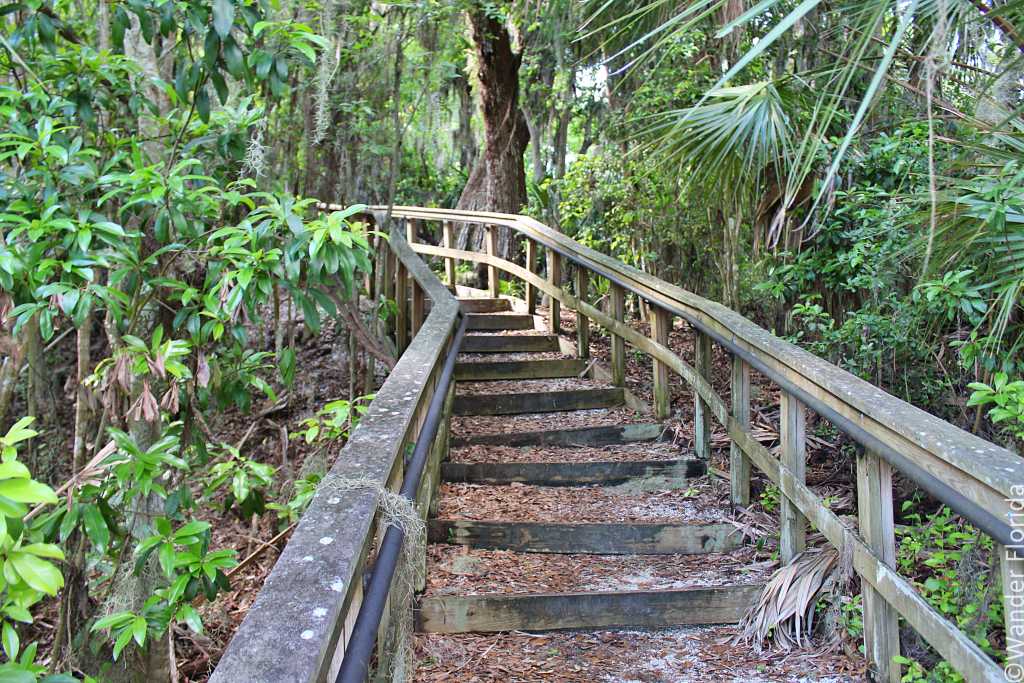
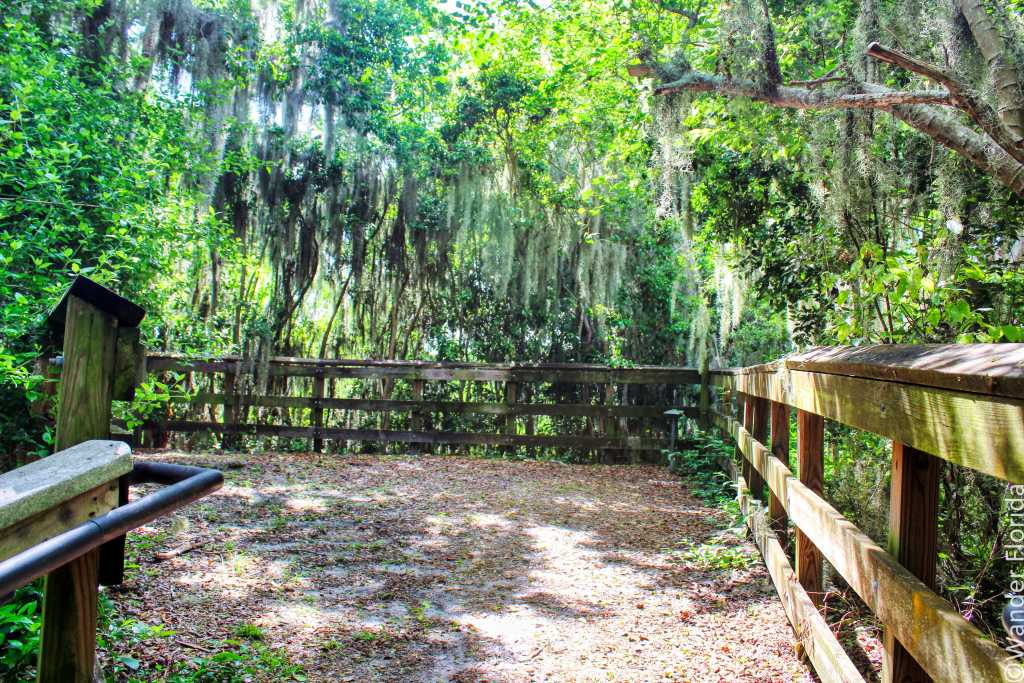
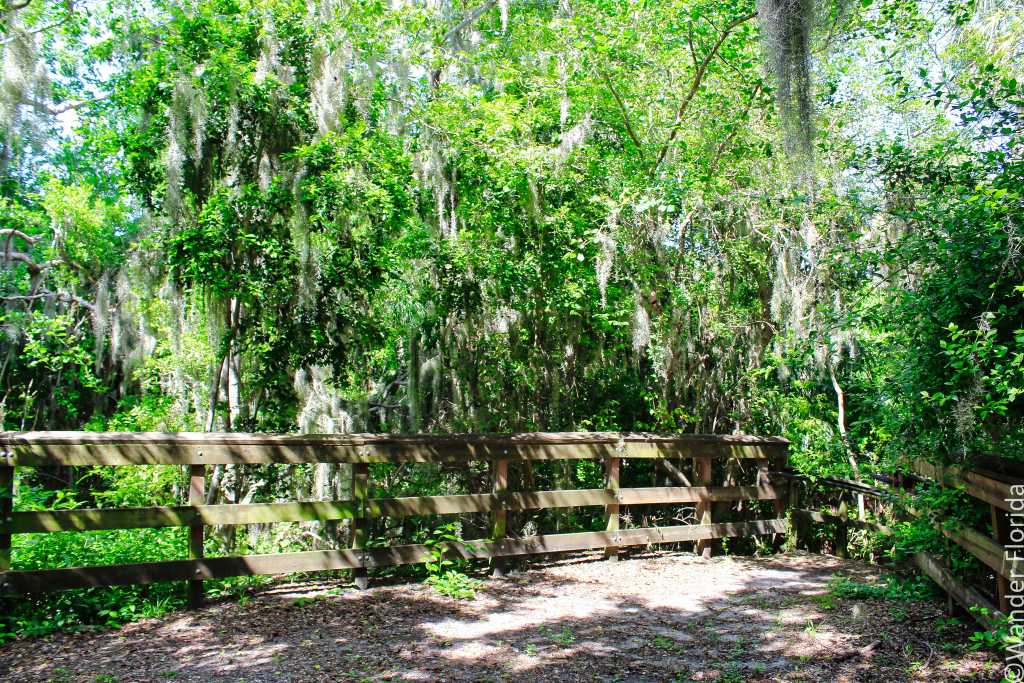
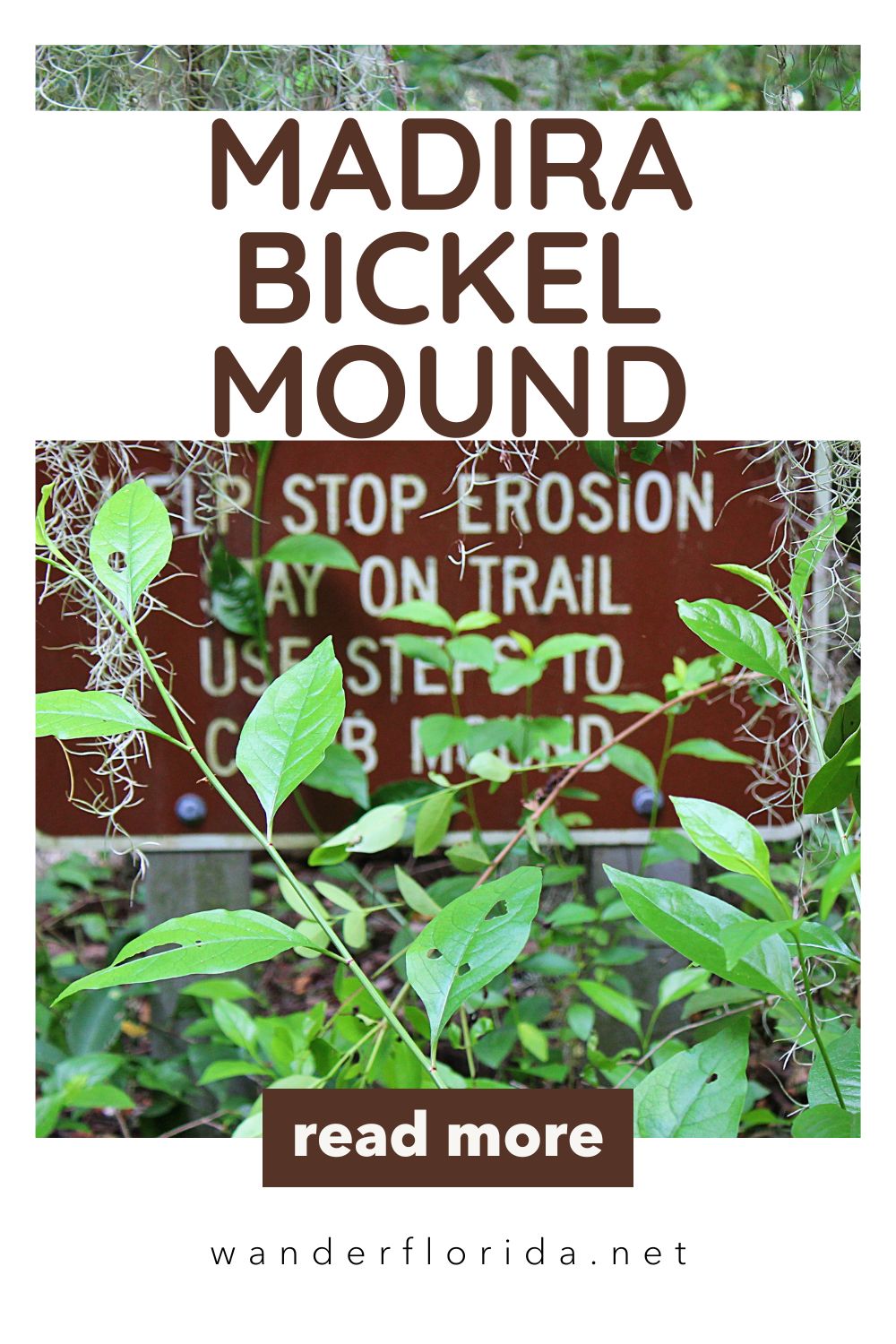
I climbed the steps to the top of the Madira Bickel Mound. Trees, vines, and moss flank the sides, the edges of the flat top fenced off. I walked from end to end with nothing but trees for a view. Reviews of the park bemoan it’s size, lack of activities, and lack of view. I understand why others might feel underwhelmed here. Yet, I think the significance of the site lies not in it’s size. Rather, this was the first archaeological site truly preserved as such in Florida, and at a time when mounds were bulldozed to use for building materials. Or, if human remains were found in the mounds, they were preserved under glass for the entertainment of visitors, like once happened at Crystal River Archaeological Site.
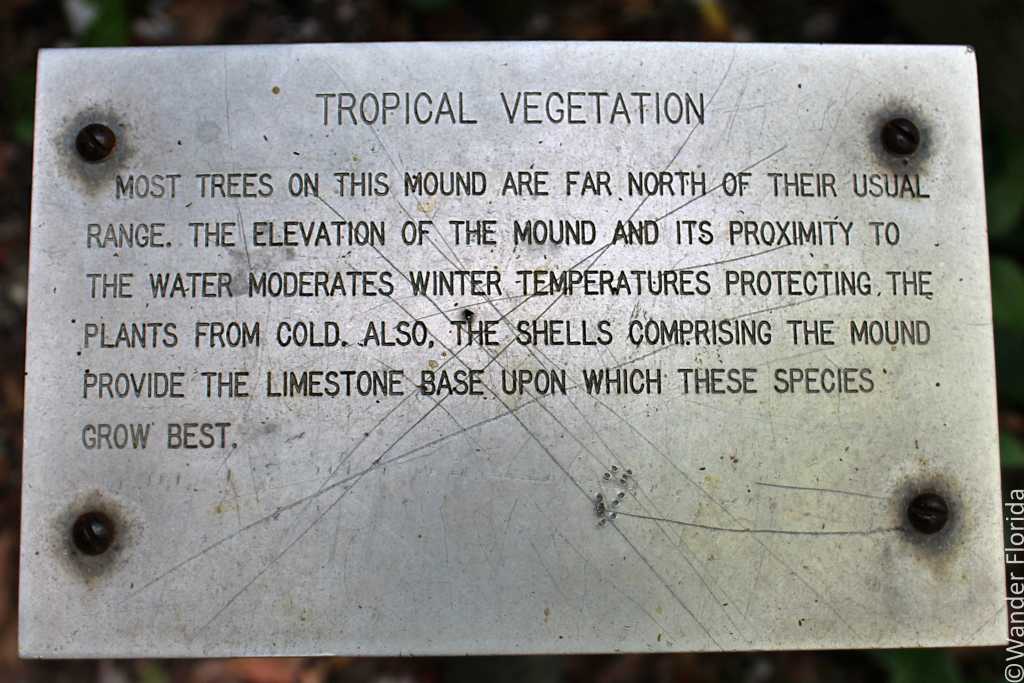
One of the more interesting features of Madira Bickel Mound is the amount of vegetation which grows here, in some cases far north of a plant or tree’s native growing area. The mound and shallow waters around Terra Ceia create a microclimate which suits much of this vegetation. The mound is 100 feet by 170 feet at the base and stands 20 feet tall. Much of it is covered in exotic species such as gumbo limbo.
History of Madira Bickel Mound
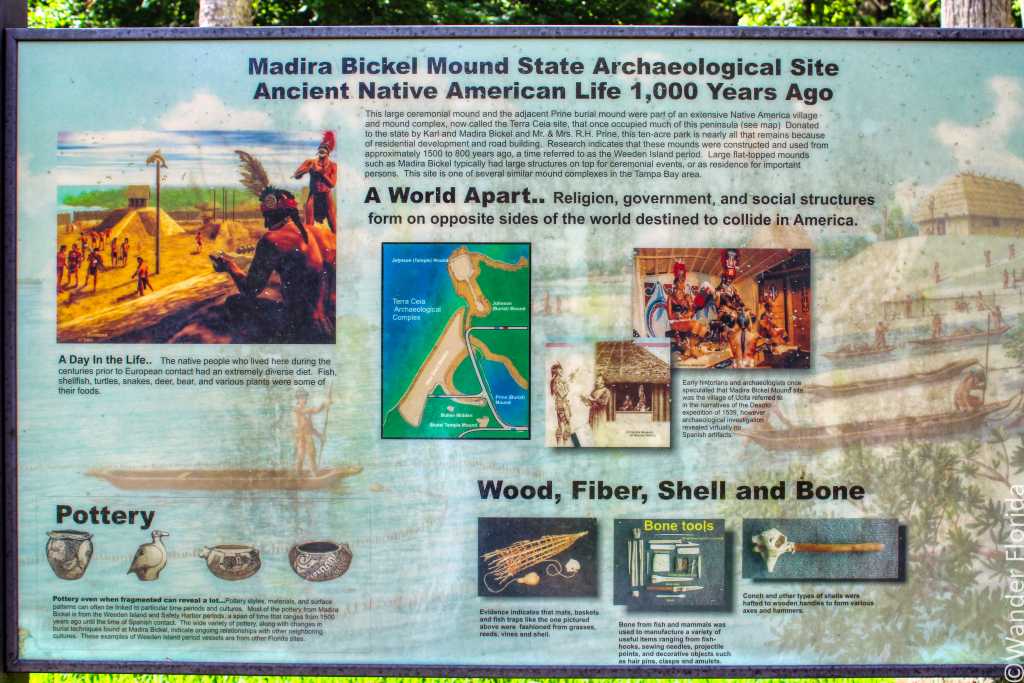
The 10 acre site was donated to the state by the Bickel and Prine families. The Madira Bickel Mound is the only one which still exists on Terra Ceia Island though remains of the smaller Prine Mound still exist as well. Excavations revealed that the Tocobaga occupied the site three times. During the first period, about 2,000 years ago, life consisted of fishing and hunting. Mound building began with the creation of kitchen middens near the shore line. The second period of occupation occurred between 700 AD and 1300 AD. Known as the Weeden Island Period, highly artistic pottery marked this period. Madira Bickel Mound and other ceremonial and burial mounds may have been constructed during the third period from 1500 AD to the end of the Spanish occupation.
While the mound now has steps where the ramp was, it is the only mound in the Tampa Bay area known to have a curved ramp. The chief likely resided at the top of the mound, his home facing East. Prine Mound stood to the northwest and contained twenty-seven burials and tens of thousands of pottery sherds. Discovered in 1900, by 1914 Prine Mound had largely been destroyed. It’s sand was used for road construction and reduced it to two feet in height.
Karl and Madira Bickel lived in Sarasota in the early 1900s and made it their mission to save as many mounds as they could. They purchased the 10 acre site in 1948 and donated it to Florida.
Directions and Information
Hours: 8:00 AM to sundown
Entrance fee: Free


I must admit that when I think of Florida I think of beaches. But the Madira Bickel Mound State Archaeological Site sounds like an interesting break from the beach if we visit the Tampa Bay Area. A great way to learn a bit more about the history of the area. And see some interesting vegetation too.
You’re not alone in immediately thinking beach with Florida. We do have some beautiful beaches, as well as loads of other beautiful places in Florida. If you visit the mounds, be sure to check out some of the others in the area. It makes for an interesting morning or afternoon if you visit 2 or 3.
Great destination! Interesting blog post about walk through the Madira Bickel Mount State site. I would love to visit this historical place some day. 🙂
I had no idea that there was an archaeological site here! It’s great that it’s free to access as well.
Yes! I love that its accessible (money-wise) to everyone.
What a fascinating destination. I love learning about local history while traveling so this is a definite must-visit for me. Thanks for sharing!
Me, too! It’s one of my favorite parts of traveling.
Loved this walk through the Madira Bickel Mound State Archaeological Site. I find this history so fascinating and grateful that it is being preserved.
Yes! Thankfully we now preserve much of this history rather than destroy it.
This is so cool! I am used to visiting ancient burial mounds like this in Europe (and even in Japan) but I had no idea they had something similar in America. What a fascinating area to explore.
Mound builders were spread over a good portion of the US and, of course, into Central and South America (the Maya and Aztec, for example).
Such an interesting article! I’ll definitely have to check out the mounds when visiting! Thanks for sharing!
Thank you! Glad you enjoyed!